Digital Security Publications
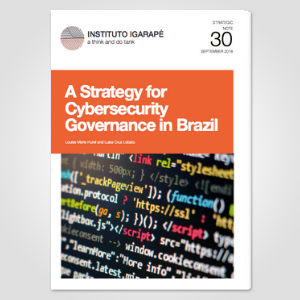
A Strategy for Cybersecurity Governance in Brazil
This study explores the institutionalization of the cybersecurity agenda in Brazil and seeks to identify opportunities for multi-stakeholder cooperation.

This study explores the institutionalization of the cybersecurity agenda in Brazil and seeks to identify opportunities for multi-stakeholder cooperation.
Executive Summary Conflict prevention has a long history within the context of the international peace and security architecture. In recent years, there has been a push to vitalize the idea. The new UN Secretary General has called for the restoration of conflict prevention to
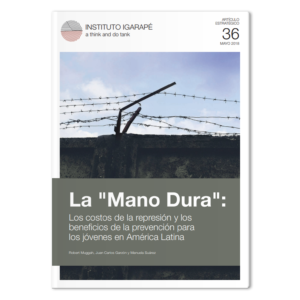
Los enfoques que prometen ser “duros contra el delito” son atractivos para la opinión pública. Líderes autoritarios y populistas suelen usarlos, ya que suenan “moralmente justos” y orientados a la acción.
There is growing recognition at the UN and among member states that peacekeeping must be made more effective, especially in face of major budget cuts and wavering leadership by traditional actors.
Many Latin American countries, states and cities are facing a chronic public security crisis.
On July 10, 2017, the President of Guinea Bissau, José Mário Vaz, met politician Domingos Simões Pereira, who had served as Prime Minister from 2014 to August 2015. Although Pereira remained head of the country’s major political party, the African Party for the Independence of
Brazil’s contribution to United Nations (UN) missions started exactly 70 years ago, when Brazilian military officers and diplomats participated in the first multinational team authorised by the Organisation to act in the Balkans in October 1947. About 10 years later, the first UN mission with
This article presents an analysis of the content of the National Plan of Action (NAP) on women, peace and security, a document adopted by Brazil on March 8, 2017, in response to United Nations calls for its member states to promote national strategies for implementation
The publication analyzes the increase in the child and youth homicides between 1980 and 2014 in Brazil.
This policy brief from the Igarapé Institute presents the historical roots and immediate causes of the conflict in the Central African Republic in order to provide support to international, national and local actors who may play a relevant role in conflict prevention in the country and, more broadly, in the central region of the continent.
This publication analyzes Cuba’s drug policy in the Twenty First Century: its challenges for an update and also its historical backgrounds.
Strategic Note about a relatively new phenomenon in international relations: since the nineties, there has been an increasing number of civilian experts who work in highly unstable contexts, once restricted to the military.
June, 2017 On 4 October 2016 Haiti was struck by a category five hurricane, the strongest such storm in over 50 years. Hundreds were killed and over 1.4 million made homeless. A household survey of 2,792 households was undertaken between 11-21 October 2016. Repeat surveys
April, 2017 Through interviews and research on primary and secondary data, the Strategic Article outlines a comprehensive history of the process of drafting, voting, and regulating the Marco Civil da Internet (Digital Bill of Rights), and an analysis of the perspective of consolidation or retreat
March, 2017 This report resumes the event which examined the extent to which the country has incorporated or could incorporate key recommendations of the HIPPO report across its own policies, programs, and activities, reinforcing its role as an active player of the international peace and
Esta Nota Estratégica tem como objetivo destacar boas práticas na implementação de diferentes planos nacionais de ação (PNA’s).
This paper aims at examining how francophone Africa presently perceives Brazil’s ambitions in light of the current and past economic, political and diplomatic relationships.
[Em Espanhol] Esta publicación contiene textos sobre el proceso de paz en Colombia – y un prólogo escrito después de la victoria del “No” en el referéndum celebrado por la población de Colombia.
This Strategic Paper aims to discuss principles and practices for implementing body cameras for law enforcement in order to achieve better effectiveness.
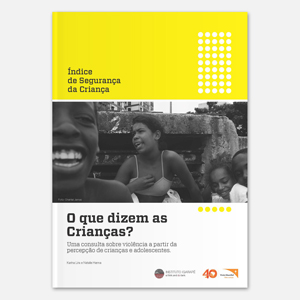
This publication gathers the results of surveys done in partnership with World Vision in 12 cities across Brazil, which revealed a host of other findings that may be of interest to policy makers, practitioners and child welfare specialists.
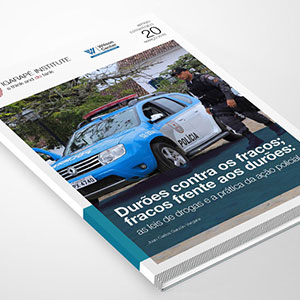
September, 2016 This article aims to identify the main impacts of drug law enforcement on policing. It points to five interrelated effects: 1) Suppression focused on minor offenses and the weakest links in the chain; 2) Arrest patterns often based on stereotypes that affect
This Homicide Dispatch critically examines the relationships between organized crime and lethal violence.

Brazil would do well to support a comprehensive approach to stability and reconstruction in Syria as advocated by the so-called Vienna Process since October 2015.
This Homicide Dispatch explores regional variations of homicide rates, identifying the countries that are driving past and present trends – and also offers short-term projections of homicide in the coming years.
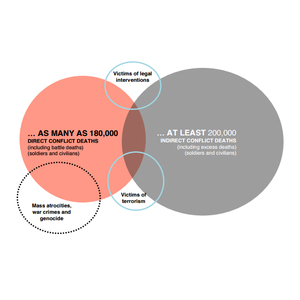
This briefing note is intended to assist the Inter-Agency and Experts Group (IAEG) on SDG indicators in developing an indicator to track the number of “conflictrelated deaths per 100,000 people”.
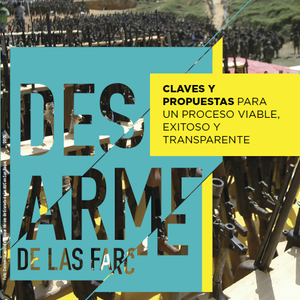
[In Spanish] Study that examines the opportunities for disarmament of the FARC, drawing on evidence from around the world of what works, and what does not, when it comes to collecting weapons when wars come to an end.
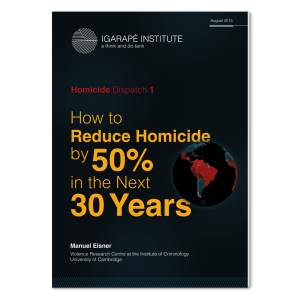
This Dispatch offers several practical recommendations to reduce homicidal violence by 50% in the next thirty years.
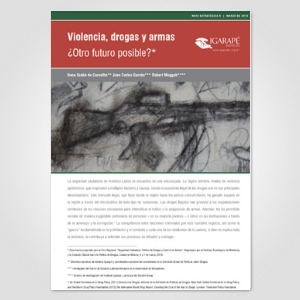
La seguridad ciudadana en América Latina se encuentra en una encrucijada.
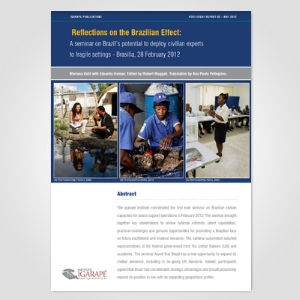
The Igarapé Institute coordinated the first ever seminar on Brazilian civilian capacities for peace support operations in February 2012.
This short report features an array of tried and tested innovations from Brazil that could have applicability for Haiti as it regains its footing after the devastating January 2010 earthquake.