
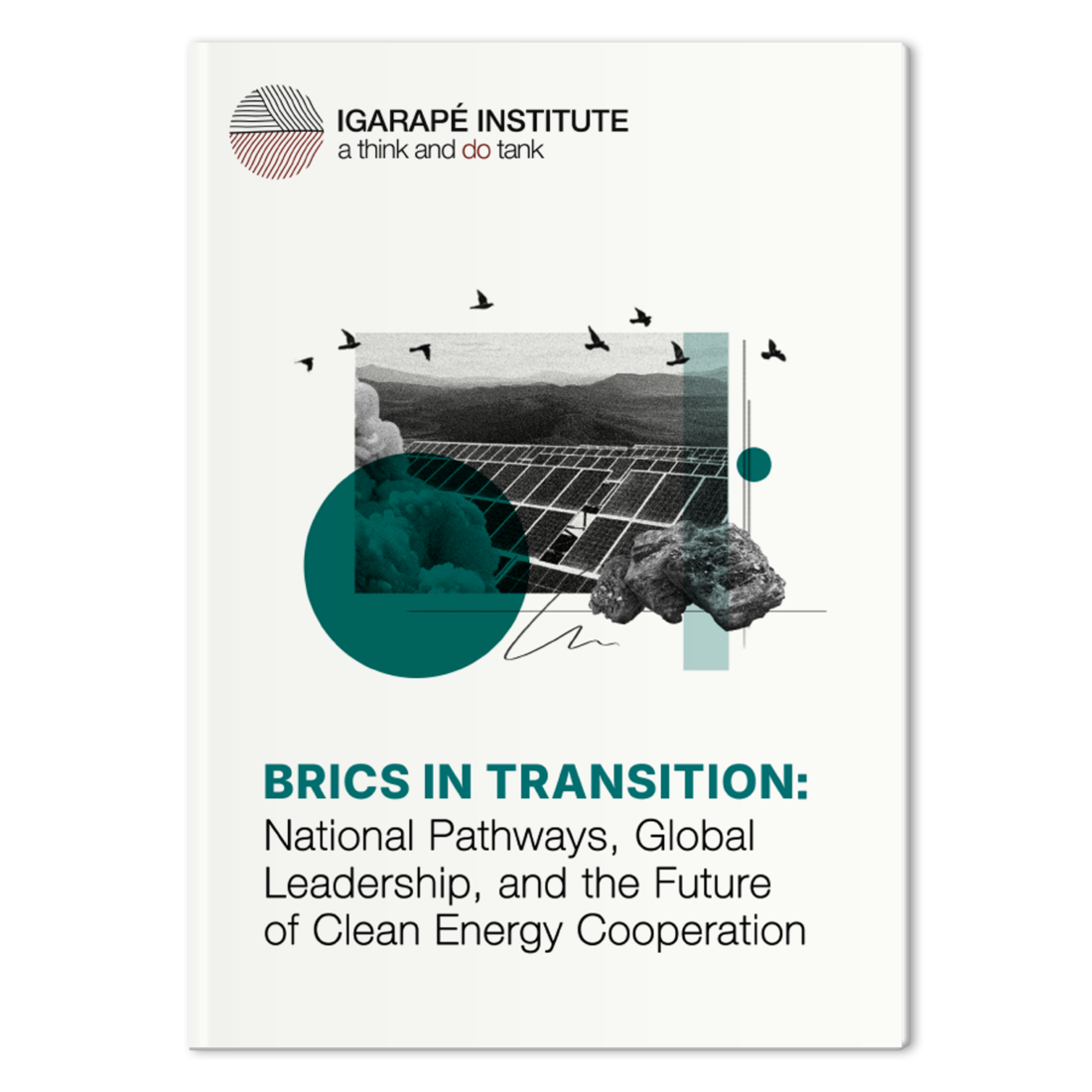
BRICS in Transition: National Pathways, Global Leadership, and the Future of Clean Energy Cooperation
 This report examines how eight selected BRICS countries—Brazil, China, Egypt, Ethiopia, India, Indonesia, South Africa, and the United Arab Emirates (UAE)—are shaping the global energy transition while balancing domestic development priorities.
Together, these countries represent major fossil fuel producers, renewable energy leaders, clean technology manufacturers, critical mineral suppliers, and increasingly important climate finance actors. Although their transition pathways differ, they all face the common challenge of reconciling decarbonization with energy security, affordability, and economic growth.
Brazil relies heavily on renewable electricity and biofuels while continuing to expand oil production. China dominates global renewable energy manufacturing but remains dependent on coal. India is rapidly scaling solar energy and green hydrogen while managing coal-dependent regions. Indonesia combines geothermal development and battery production with continued coal expansion. South Africa seeks a just transition despite an aging coal-based power system. Egypt, Ethiopia, and the UAE each pursue distinct strategies centered on solar, hydropower, green hydrogen, or clean energy investment.
Beyond national policies, these countries increasingly cooperate through South-South partnerships involving finance, technology transfer, infrastructure, and policy exchange. Collectively, they have the potential to become major drivers of a fair and inclusive global energy transition.
The report argues that BRICS cooperation extends far beyond climate diplomacy, encompassing industrial policy, infrastructure, development finance, geopolitical influence, and clean-energy value chains. However, cooperation remains fragmented, underfinanced, and constrained by continued dependence on fossil fuels.
To strengthen collective action, the report recommends immediate measures such as creating an NDB green transition financing window, establishing a BRICS roadmap for transitioning away from fossil fuels, launching a just transition facility for coal-dependent regions, adopting common standards for critical minerals and clean technologies, developing a pipeline of bankable clean energy projects, and creating a BRICS Energy Transition Policy Observatory.
Longer-term recommendations include establishing joint research centers, integrating cross-border electricity grids, expanding trilateral partnerships across the Global South, and presenting a more coordinated BRICS position in international climate negotiations.
The report concludes that BRICS countries possess the scale, resources, and institutional capacity to accelerate the global energy transition. Their greatest challenge is no longer setting ambitious climate targets, but implementing them while overcoming infrastructure constraints, financing gaps, fossil fuel dependence, and social trade-offs associated with a just transition.
Read the publication
Learn more about this topic in the Global Futures Bulletins Brazil’s BRICS Presidency and COP30: Advances and Next Steps in the Climate Agenda and The BRICS and the Decarbonization and Biodiversity Protection Challenges